The Zanzibar spice farm tour: what it is, and what it is not
Updated September 24, 2026 · 6 min read
The spice tour is the cheapest thing you can book on Zanzibar. There are 79 offers in the current stock with “spice” in the title, starting at €7.91 – below every boat trip, every walking tour and every transfer on the island.
That price tells you what it is. It is an hour or so on a working smallholding with a guide who cuts things open and hands them to you. It is not a plantation tour, it is not a factory, and it is not where Zanzibar’s cloves actually come from. All three of those things are worth knowing before you go, because the tour is genuinely good once you stop expecting the wrong thing from it.
What the hour on the farm is actually like
Most tours go to the smallholdings around Kizimbani or Kidichi, roughly 10 to 15 km north-east of Stone Town, on the fertile band of the island where there is deep soil and fresh water. The east and south-east coasts are coral rag and grow almost nothing – which is why the spice farms are all in the same small area and why every tour goes to more or less the same place.
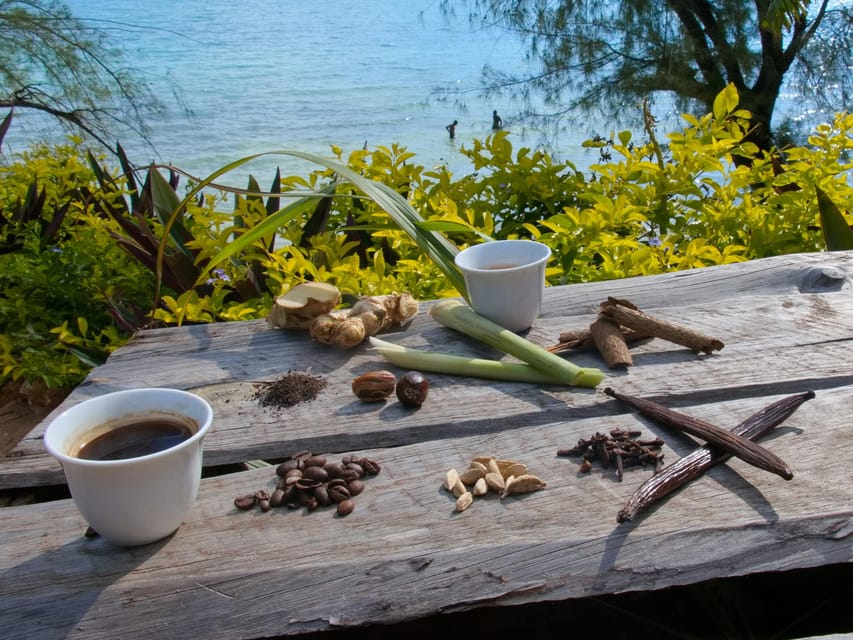
The format is consistent. You walk a loop of a few hundred metres with a guide who stops at each plant, and the point is that you are asked to identify things by smell and taste before being told what they are. Cloves, cinnamon scraped off the bark in front of you, nutmeg split open to show the scarlet mace around the seed, vanilla, cardamom, turmeric, lemongrass, black pepper, and whatever fruit is in season. It is hands-on in a way that photographs badly and works well.
Reckon on an hour to eighty minutes of that. The most-reviewed spice-farm-plus-cooking offer in the stock sets aside one hour for the guided walk and another twenty minutes at a market stall – and then, tellingly, 75 minutes in the van each way. Its headline duration field says three hours. An hour on the farm, twenty minutes at the stall and two van legs of 75 minutes is just under four hours before you add the meal the same listing sells you, which is a standing problem with this category: read the itinerary, not the duration field. The same warning applies to the Prison Island and Nakupenda boats.
The history nobody puts in the brochure
Cloves reached Zanzibar in the early nineteenth century, and the Omani sultanate built an economy on them. For most of the nineteenth and twentieth centuries the archipelago supplied a very large share of the world’s cloves, and the plantations that produced them were worked by enslaved people. The same sultanate ran both: the clove estates and the slave market. One paid for the other.
That is not a footnote to the spice tour, it is the reason the spice tour exists. A good guide will say so. If yours does not, the history is told properly in town – see Stone Town on foot.
The other thing the brochures skip: the clove island is Pemba, not the one you are standing on. Pemba, the archipelago’s northern island, has long been the main clove island of the two. The farms you visit on Unguja are real farms, but at this scale they are demonstration plots that sell to visitors, not the industry.
The trade is in trouble, and that is part of the tour now
This is the current fact that makes the visit more interesting rather than less.
The Zanzibar State Trading Corporation (ZSTC) is the sole legal buyer and exporter of the islands’ cloves – farmers sell to it and to nobody else. On the trade figures reported for the year to September 2025, Tanzania’s clove export value fell by 76 per cent, to USD 6.3 million from USD 26.3 million, and the volume shipped dropped from 3,900 tonnes to 1,200 tonnes.
ZSTC gave two reasons. One is competition: more countries have moved into clove production and the world market is oversupplied. The other is climate, in the words of the corporation’s own spokesman – “Rainfall is irregular, temperatures fluctuate, and flowering cycles are shifting. Farmers no longer know what to expect.”
So the “Spice Island” is, at the moment, a small player in the spice trade with a very large tourism business attached. That is worth carrying around the farm with you. The family showing you a clove tree is not demonstrating a heritage craft; they are working in an industry that lost three quarters of its export earnings in a year, and your entrance fee is part of what replaced it.
There are 86 spice farm tours from €7.91 at spice farm tours.
The shopping, the hats, and the tipping
Two things happen at the end of every spice tour, and neither is a scam, but both go better if you expect them.
The palm-leaf gifts. Younger members of the farm’s team weave hats, ties, rings and baskets from palm fronds while you walk, and present them to you at the end. They are genuinely skilful and they are made for a tip. A small note per person is the norm; bring it in small denominations, because nobody at a farm gate has change for a large one.
The spice stall. You will finish at a table of bagged spices, oils and soaps. Vanilla is the expensive one, and quality varies more than price does. Two rules: ask what something costs before it is wrapped, and do not buy your whole supply at the first stall – Darajani market in Stone Town sells the same goods and is worth comparing against. Nothing here is a rip-off, but the farm gate is a captive audience and is priced accordingly.
What to bundle it with, and what not to
The spice farm is almost never sold alone, and the combinations are unusually sensible because everything sits on the same road north-east of town.
Spice farm plus Stone Town plus Prison Island is the single most-booked combination on the island. It is a long day and it works.
Spice farm plus Jozani is the better one if you care about what you are looking at, because both halves are on the same side of the island and neither is rushed – Jozani Forest and the red colobus.
Spice farm plus a cooking class is the one most people do not know exists. There are 15 offers in the stock that combine the two, from €22.49, and they are the only version of this outing where you use what you have just been shown. The full category is 58 food and cooking experiences from €10 at food and cooking tours.
What not to bundle: a beach at the far end. A spice farm is 40 minutes from Stone Town and three hours from nothing. Adding Michamvi or Mtende turns a good morning into a day in a minibus.
Is it worth it?
At €7.91 to €20, yes, almost unconditionally – it is the best value on the island and the one excursion that explains why the place looks and smells the way it does.
At €60 and up, only if the listing is buying you something specific: a private guide, a genuine cooking session, or a meal that is the point rather than a filler. A €70 spice tour is not a better spice farm. It is the same hour with a restaurant attached.
How it fits with everything else is in what to see in Zanzibar.